

Formula 1’s 2026 season has produced one of the most compelling title races in years, and at the center of it is a driver many predicted would need time to settle in. Instead, Kimi Antonelli’s F1 championship 2026 campaign has been defined by consistency, speed, and a Mercedes car that has proven to be the class of the field for most of the year.
With Lewis Hamilton mounting a genuine title challenge from inside the Ferrari garage, the 2026 season has turned into a fascinating story of a rising star trying to hold off one of the sport’s greatest-ever drivers.
Antonelli’s Commanding Points Lead
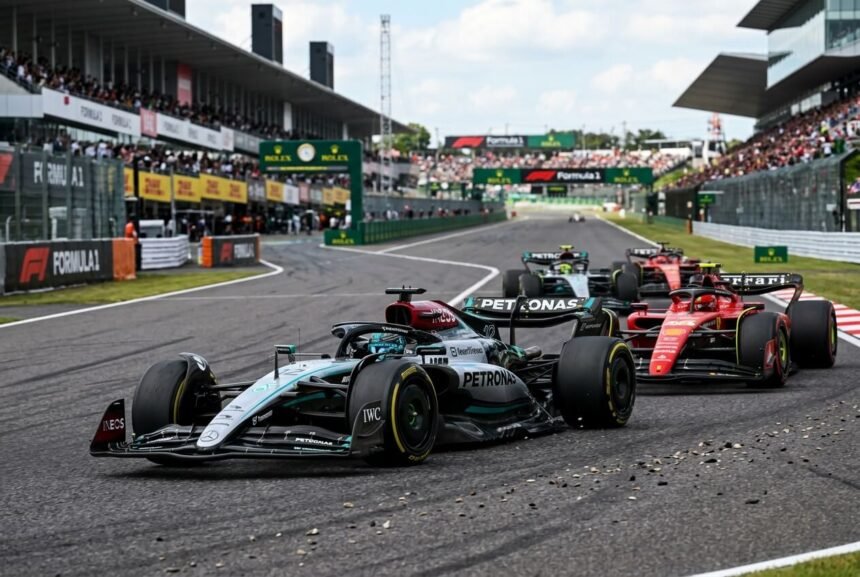
As the season progressed past the Hungarian Grand Prix, Antonelli had built a significant advantage at the top of the drivers’ standings, having won six of the season’s races to that point. Mercedes as a team had won every single race that year bar two, underlining just how dominant their package had been for most of the campaign.
Despite that dominance, the title race has remained genuinely open, largely because of reliability issues that occasionally cost Mercedes crucial points — cracking the door open for Ferrari’s charge.
The Chasing Pack
Behind Antonelli, the standings told a story of a season where multiple drivers remained mathematically alive in the title conversation for longer than the raw points gap might suggest:
- Lewis Hamilton (Ferrari): Antonelli’s closest challenger, moving up to second in the standings following a strong showing at the Belgian Grand Prix
- George Russell (Mercedes): Antonelli’s own teammate, keeping pressure on from within the same garage
- Charles Leclerc (Ferrari): Rounding out a genuine four-way fight among two teams
With Hamilton trailing by around 45 points at one stage of the season, the gap was significant but not insurmountable given how many races remained on the calendar.
Why Ferrari’s Charge Matters
Ferrari’s ability to close the gap on a dominant Mercedes car as the season progressed speaks to consistent in-season development — a trait that has often eluded the Scuderia in previous title-challenging seasons. Hamilton’s move to Ferrari has been closely scrutinized since it was announced, and a title fight in his time with the team would be viewed as vindication of the switch, regardless of the final outcome.
A Season of Fine Margins
What makes this title race compelling isn’t just the gap between the leaders — it’s the reliability factor. Mercedes’ near-total dominance in race wins hasn’t always translated into a runaway championship lead, largely because points have occasionally slipped away due to mechanical issues rather than pace deficits.
Key Facts / Quick Summary
- Championship leader: Kimi Antonelli (Mercedes)
- Wins by mid-season: Six race victories for Antonelli; Mercedes won all but two races on the calendar to that point
- Closest challenger: Lewis Hamilton (Ferrari), trailing by around 45 points at the midway point
- Other contenders: George Russell (Mercedes) and Charles Leclerc (Ferrari) remained in the championship picture
- Storyline: A season shaped by Mercedes’ outright pace versus Ferrari’s growing reliability and development gains
Expert-Style Analysis
There’s a tendency in Formula 1 to assume that a team winning almost every race has the championship locked up, but 2026 has been a useful reminder that reliability can be just as decisive as raw pace over a full season. Mercedes’ dominance in terms of race wins hasn’t fully insulated Antonelli from pressure, precisely because points have been left on the table in ways that a genuine title rival like Ferrari can exploit.
For Antonelli specifically, leading a championship fight this convincingly in what is still a relatively early stage of his career is a strong signal of his long-term ceiling. Rookies and sophomore drivers often need a full season — or several — to consistently extract maximum performance from a car under sustained pressure; doing so while fending off a driver of Hamilton’s caliber adds real weight to his title credentials.
For Ferrari and Hamilton, the story is different but equally compelling. A title challenge in his time with the team, even if it ultimately falls short, would represent one of the more significant subplots of his career — proof that his move wasn’t just about chasing one final chapter, but genuinely competing at the sharp end of the grid.
Frequently Asked Questions
Q1: Who is leading the 2026 F1 championship?
Kimi Antonelli, driving for Mercedes, has led the 2026 drivers’ championship for the majority of the season.
Q2: How many races had Antonelli won by the midpoint of the 2026 season?
He had won six races by the time the season reached the Hungarian Grand Prix.
Q3: Who is Antonelli’s closest title rival?
Lewis Hamilton, driving for Ferrari, has been his closest challenger for much of the season.
Q4: How dominant has Mercedes been in the 2026 F1 season?
Mercedes won every race except two through the midpoint of the season, making them the standout team of the year so far.
Q5: Is George Russell also in title contention?
Yes, Antonelli’s Mercedes teammate George Russell has remained within reach of the championship lead for parts of the season.
Q6: How is Ferrari performing in the 2026 season compared to Mercedes?
Ferrari, led by Hamilton and Leclerc, has closed the gap on Mercedes as the season progressed, largely due to reliability advantages and in-season development gains.
The 2026 Formula 1 season has delivered exactly the kind of title fight fans hope for: a dominant car, a rising star under pressure, and a genuine challenger closing the gap from a rival garage. Kimi Antonelli’s F1 championship 2026 campaign has been built on consistency and race-winning pace, but Lewis Hamilton’s Ferrari charge ensures nothing is settled until the final laps of the season. Whichever way the title goes, 2026 has already established itself as one of the more genuinely competitive seasons in recent Formula 1 history.