

eSports Explained: How Competitive Gaming Became a Billion-Dollar Industry
Two decades ago, competitive video gaming was a niche hobby confined to LAN cafes and university computer labs. Today, eSports fills arenas, commands broadcast rights deals, and has turned professional gamers into household names with sponsorship portfolios that rival traditional athletes. Understanding how this transformation happened says as much about modern sports business as it does about gaming itself.
What Exactly Is eSports?
eSports refers to organised, competitive video gaming, typically played professionally in structured leagues and tournaments with prize money, sponsorships, and spectators — either in person or via live streaming. Unlike casual gaming, eSports involves defined rulesets, rankings, official governing bodies for specific titles, and a competitive ecosystem that mirrors traditional sport: leagues, franchises, transfer windows, and international championships.
The term covers a wide range of game genres, including multiplayer online battle arenas (MOBAs) like League of Legends and Dota 2, first-person shooters like Valorant and Counter-Strike, battle royale titles like Fortnite, sports simulations like FIFA/EA Sports FC, and real-time strategy games. Each title has its own dedicated professional scene, fanbase, and competitive calendar.
The Structure of Competitive Gaming
Most major eSports titles are organised around a mix of publisher-run leagues and third-party tournament organisers. Publishers such as Riot Games and Valve maintain significant control over their competitive ecosystems, setting rules, sanctioning official leagues, and often distributing broadcast revenue to participating teams. This is a key difference from traditional sport, where the game itself is not owned by a single commercial entity.
Franchise-based leagues, such as the League of Legends Championship Series (LCS) structure used in several regions, mirror the closed-league model seen in leagues like the NBA, offering franchise slots to organisations for a fixed buy-in rather than relying purely on promotion and relegation. This model provides financial stability for team owners and predictable scheduling for broadcasters and sponsors.
Why Brands Invest in eSports
eSports offers advertisers something increasingly rare: a young, highly engaged, digitally native audience that is difficult to reach through traditional television advertising. Viewers of major tournaments skew heavily toward younger demographics who consume content primarily through streaming platforms rather than linear broadcast, making eSports sponsorship attractive to technology brands, energy drink companies, telecom providers, and increasingly, mainstream consumer brands looking to build relevance with younger audiences.
Sponsorship in eSports takes several forms: team jersey and equipment branding, tournament title sponsorships, in-game advertising, and influencer-style partnerships with individual players and streamers who often have personal followings that rival or exceed their team’s own audience.
The Role of Streaming Platforms
Platforms such as Twitch and YouTube Gaming have been central to eSports’ growth, providing free, accessible broadcast infrastructure that lets fans watch official tournaments as well as player practice sessions and informal scrims. This constant content pipeline keeps fans engaged well beyond scheduled tournament windows, a level of access traditional sports rarely offer.
Streaming has also created an alternate career path within competitive gaming: many professional players build personal brands as streamers and content creators alongside their competitive careers, diversifying their income and extending their relevance even after their competitive playing days end.
Major Tournaments and Prize Pools
Some of the largest events in eSports rival traditional sporting events in scale. Dota 2’s The International has historically featured some of the largest prize pools in competitive gaming history, funded in part through community-purchased in-game items. League of Legends World Championship draws viewership figures that compete with major traditional sporting broadcasts in several countries. Counter-Strike and Valorant majors similarly command large global audiences and significant broadcast investment.
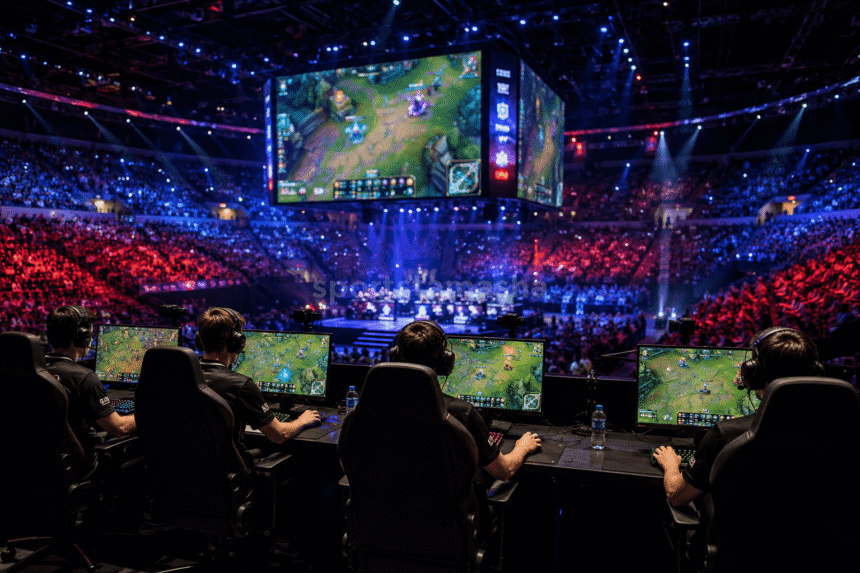
These tournaments are typically hosted in large arenas with elaborate stage production, live commentary teams, and analyst desks, borrowing heavily from the presentation style of traditional televised sport.
Career Pathways in eSports
Professional players usually begin in amateur or semi-professional leagues, building a public track record through ranked ladders and smaller tournaments before being scouted by professional organisations. Career longevity varies significantly by title and role, with reaction-time-intensive games often favouring younger players, while strategy-heavy titles can support longer competitive careers.
Beyond playing, the industry supports a wide range of career paths: coaching, analysis, broadcast production, tournament organisation, and team management, many of which are staffed by former competitive players transitioning into the business side of the sport.
Challenges Facing the Industry
eSports still faces structural challenges familiar to a young industry: inconsistent revenue models across titles, player burnout given demanding practice and travel schedules, and questions around long-term financial sustainability for team organisations that often operate at a loss while chasing brand value and future revenue growth. Regulatory questions around player contracts, image rights, and player welfare are also becoming more prominent as the industry matures.
Frequently Asked Questions
Is eSports considered a real sport? eSports is widely recognised as organised competitive gaming with professional structures, sponsorships, and international tournaments, and several sporting bodies and even multi-sport events have begun to formally recognise it, though the classification remains debated in some traditional sporting circles.
How do eSports players make money? Income typically comes from team salaries, tournament prize money, individual sponsorships, and streaming or content creation revenue.
Which games have the biggest eSports scenes? League of Legends, Dota 2, Counter-Strike, Valorant, and Fortnite are among the titles with the largest and most established competitive ecosystems.
Do eSports teams operate like traditional sports franchises? Many do, particularly in franchised leagues, with owned rosters, coaching staff, training facilities, and long-term sponsorship deals similar to traditional sports organisations.
From LAN cafes to sold-out arenas, eSports has built an entirely new sporting economy in a remarkably short time, and its continued growth suggests competitive gaming’s place alongside traditional sport is only becoming more firmly established.
Regional Differences in eSports Culture
eSports popularity and infrastructure vary considerably by region, with South Korea historically recognised as a pioneering market for professional gaming culture, supported by dedicated broadcast infrastructure and strong government recognition of eSports as a legitimate competitive pursuit. China and other parts of Southeast Asia have similarly developed massive, passionate eSports followings, while North America and Europe have built strong scenes around specific titles, often shaped by regional publisher partnerships and localised league structures. These regional variations continue to shape how individual game titles grow and where the strongest competitive talent pools tend to emerge from.