


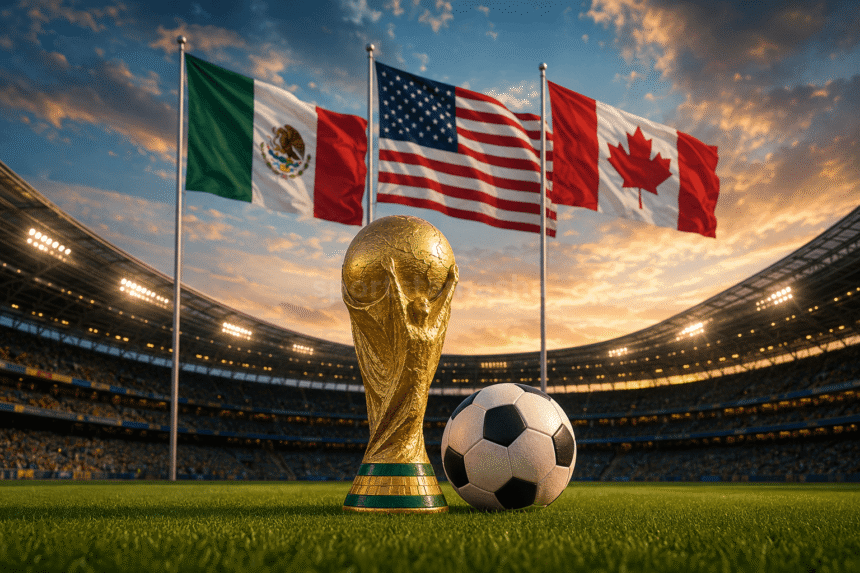
FIFA World Cup 2026: Format, Host Nations and What to Expect
The FIFA World Cup has always been football’s ultimate stage, and the 2026 edition marks a genuine turning point in the tournament’s history. Co-hosted across three countries and expanded to include more teams than ever before, the 2026 World Cup represents the biggest version of the competition in its nearly century-long history.
A Historic Three-Nation Host
For the first time, the FIFA World Cup is being staged across three countries simultaneously: the United States, Canada, and Mexico. This tri-nation hosting arrangement reflects both the logistical scale required to stage an expanded tournament and FIFA’s broader strategy of growing the game commercially in North America, a region seen as having significant untapped potential for football’s global fanbase. Mexico becomes the first country to host the men’s World Cup on three separate occasions, having previously hosted in 1970 and 1986.
Matches are being played across a wide network of stadiums spanning all three countries, requiring teams, fans, and broadcasters to navigate a far larger geographic footprint than any previous edition of the tournament.
The Expanded 48-Team Format
The 2026 World Cup introduced a significant structural change: an expansion from 32 to 48 participating teams, the largest field in the tournament’s history. This expansion increases the total number of matches played and extends the group stage structure, with teams now organised into smaller groups before progressing through an expanded knockout bracket that includes a round of 32.
The expanded format has generated genuine debate within the football community. Supporters argue it gives more nations a genuine opportunity to experience World Cup football, boosting the game’s global development and giving smaller footballing nations meaningful qualification pathways. Critics have raised concerns about diluted competitive quality in the early stages and the physical toll of an extended tournament schedule on players who already face congested domestic and international calendars.
Qualification Pathway
Qualification for the expanded tournament involved adjusted continental allocations, with more direct qualification spots distributed across confederations including UEFA, CONMEBOL, CAF, AFC, CONCACAF, and OFC, reflecting FIFA’s stated goal of growing football’s global reach through wider tournament representation. The three host nations, as is tradition, received automatic qualification without needing to compete in the qualifying process.
Why This World Cup Matters Commercially
Hosting across three of the world’s largest sports and media markets significantly increases the tournament’s commercial scale, from broadcast rights and sponsorship deals to merchandising and tourism revenue. Brands across categories — from global telecoms and beverage companies to technology and financial services providers — treat World Cup sponsorship as one of the most valuable marketing platforms available, given the tournament’s reach across virtually every country in the world.
The North American hosting arrangement also gives FIFA and its commercial partners direct access to some of the largest sports media markets globally, with expectations that the tournament will help accelerate football’s growth in the United States specifically, building on the sport’s steadily rising domestic popularity over the past two decades.
Stadiums and Infrastructure
The 2026 tournament utilises a mix of large-capacity American football stadiums retrofitted for football, alongside established football venues in Mexico and Canada, providing some of the largest average stadium capacities in World Cup history. This infrastructure choice reflects the scale of American sports venues generally, offering significantly higher seating capacity than many traditional football-specific stadiums used in previous tournaments.
What Fans Can Expect
Beyond the expanded format, fans should expect a tournament shaped by considerable travel distances between host cities, particularly given the geographic spread across three countries. This has practical implications for supporters following their national teams, as well as for team logistics, with squads potentially covering thousands of kilometres between fixtures depending on their group and knockout stage draw.
The expanded 48-team format also means more group-stage matches overall, giving fans a longer and more varied tournament experience, with additional storylines from nations making their World Cup debut or returning after a long absence from the competition.
The Broader Legacy Question
As with any major hosting decision, the 2026 World Cup carries a legacy dimension beyond the month of competition itself. Host cities and countries typically invest heavily in infrastructure upgrades, transportation improvements, and stadium renovations in the lead-up to the tournament, with governments and organisers pointing to long-term economic and tourism benefits, while critics of major sporting events often raise questions about cost overruns and the actual long-term return on public investment.
Frequently Asked Questions
Which countries are hosting the 2026 FIFA World Cup? The tournament is co-hosted by the United States, Canada, and Mexico, marking the first time the men’s World Cup has been staged across three nations.
How many teams are competing in the 2026 World Cup? The tournament features 48 teams, expanded from the previous 32-team format used in earlier editions.
Has Mexico hosted the World Cup before? Yes, Mexico previously hosted in 1970 and 1986, making 2026 its third time hosting the tournament, a first for any host nation.
Why was the tournament expanded to 48 teams? FIFA cited a desire to grow the game’s global reach and give more nations a genuine opportunity to compete on football’s biggest stage, though the decision has drawn both support and criticism within the football community.
The 2026 FIFA World Cup represents a genuine evolution of the tournament’s scale and format, and its success across three host nations will likely shape how future editions of the competition are structured and staged.
Security and Logistical Planning
Staging a tournament across three countries simultaneously presents unprecedented logistical and security planning challenges compared to previous single or dual-host World Cups. Organisers, host city governments, and security agencies across all three nations have coordinated extensively on transportation, stadium security, and cross-border fan movement, given the significant number of supporters expected to travel between host cities during the tournament, particularly during the knockout stages when fixture scheduling can require rapid movement across considerable distances within a short timeframe.
Sustainability considerations have also featured prominently in tournament planning discussions, with organisers facing scrutiny over the environmental impact of extensive fan and team travel across such a geographically dispersed three-nation hosting arrangement.