


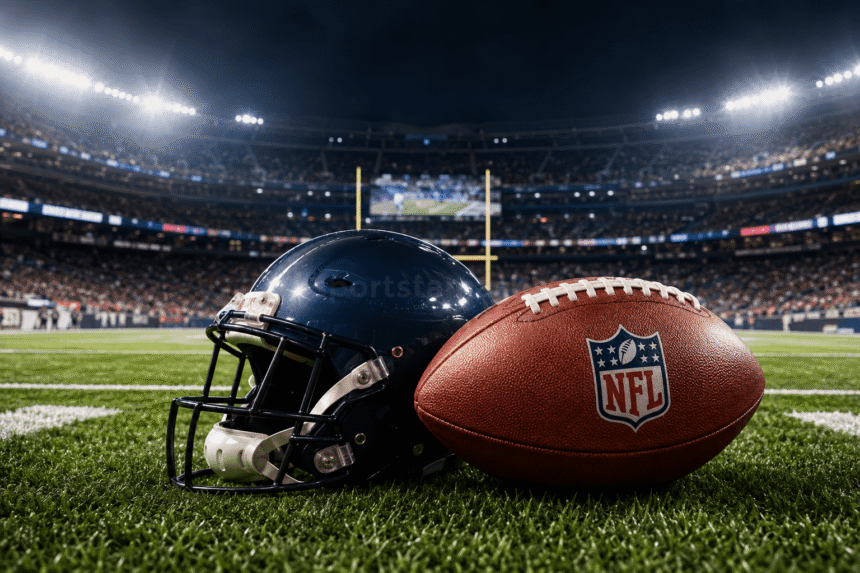
NFL Basics: Understanding American Football’s Biggest League
The National Football League stands as the most-watched professional sports league in the United States, built around a sport that combines strategic complexity, physical intensity, and week-to-week drama in a way few other competitions can match. For newcomers, the rules and structure can initially seem dense, but the underlying logic is more approachable than it first appears.
The Objective of the Game
American football is played between two teams of eleven players, with the objective of advancing the ball into the opposing team’s end zone to score points, primarily through touchdowns and field goals. A touchdown, worth six points, is scored by carrying or catching the ball in the opponent’s end zone, typically followed by an extra point or two-point conversion attempt. Field goals, worth three points, are scored by kicking the ball through the opponent’s goalposts.
Downs: The Core Mechanic of the Sport
Central to understanding American football is the “downs” system. An offensive team has four attempts, called downs, to advance the ball at least ten yards. If they succeed within those four downs, they earn a fresh set of four downs and continue their possession. If they fail to gain ten yards within four attempts, possession typically transfers to the opposing team, usually via a punt on fourth down if the offence chooses not to attempt to convert.
This system creates the strategic backbone of the sport: every play is essentially a calculated risk assessment, balancing the yardage a team believes it can gain against the field position consequences of failing to convert.
Offensive and Defensive Roles
On offence, the quarterback typically serves as the primary decision-maker, responsible for either passing the ball to receivers or handing it off to running backs. Wide receivers and tight ends are the primary passing targets, while running backs carry the ball on rushing plays. The offensive line protects the quarterback and creates running lanes, performing a largely unglamorous but essential role in the team’s overall success.
On defence, the defensive line aims to pressure the quarterback and stop running plays at the line of scrimmage, linebackers provide a versatile mix of run defence and pass coverage responsibilities, and defensive backs — cornerbacks and safeties — are primarily tasked with defending against passing plays deep in the field.
Season Structure
The NFL regular season spans 18 weeks, with each team playing 17 games, a relatively short season compared to many other major professional sports leagues, reflecting the significant physical toll the sport takes on players. This compressed schedule means individual games carry substantial weight in playoff qualification, with far less margin for a prolonged mid-season slump than sports with considerably longer regular seasons.
Following the regular season, the top teams from each conference — the American Football Conference (AFC) and National Football Conference (NFC) — advance to the playoffs, a single-elimination tournament culminating in the Super Bowl, one of the most-watched annual sporting events in the world.
Why the Super Bowl Is Such a Cultural Event
The Super Bowl has grown into something considerably larger than a championship game, functioning as a major American cultural event complete with an elaborate halftime show and some of the most expensive television advertising slots of the entire year. This crossover appeal, extending well beyond dedicated football fans, has been central to the NFL’s position as America’s most commercially significant sports league.
Player Safety and Rule Evolution
Given the sport’s inherently physical, high-contact nature, player safety has become an increasingly central focus of NFL rule-making over the past two decades, with ongoing adjustments to tackling techniques, equipment standards, and concussion protocols aimed at reducing injury risk, particularly around head and neck trauma. These changes reflect a broader, ongoing effort within the league to balance the sport’s competitive and physical identity against growing understanding of the long-term health risks associated with repeated impacts.
The Draft and Talent Pipeline
New talent typically enters the NFL through the college football system, with the NFL Draft serving as the primary formal mechanism for teams to acquire new players each year. College football itself operates as a massive, closely followed sporting ecosystem in its own right, serving as an extended, multi-year audition process that shapes how NFL teams evaluate incoming talent.
Frequently Asked Questions
How many games does an NFL team play in a regular season? Each team plays 17 regular season games across an 18-week schedule.
What happens if a team fails to gain ten yards in four downs? Possession of the ball typically transfers to the opposing team, usually following a punt if the offence chooses not to attempt converting on fourth down.
How are the playoffs structured? The top teams from the AFC and NFC advance to a single-elimination playoff tournament, culminating in the Super Bowl between the two conference champions.
Why has player safety become such a significant focus for the NFL? Growing understanding of the long-term health risks associated with repeated physical impacts has driven ongoing rule changes aimed at reducing injury risk, particularly around head and neck trauma.
From the strategic chess match of the downs system to the spectacle of Super Bowl Sunday, the NFL’s blend of physicality, tactics, and entertainment has cemented its place as one of the most closely followed sports leagues in the world.
The Role of Coaching Staff and Game Planning
NFL coaching staffs have grown substantially in size and specialisation over recent decades, with dedicated coordinators overseeing offensive and defensive strategy, alongside specialist position coaches focused on individual skill development. Game planning has become an increasingly data-driven process, with analytics departments now playing a significant role in decisions such as fourth-down conversion attempts and situational play-calling, reflecting a broader shift toward statistically informed decision-making across the league. This heightened strategic complexity has made coaching quality an increasingly significant differentiator between teams with comparable levels of individual playing talent.
Fantasy football’s massive popularity in the United States has also become an important secondary driver of NFL engagement, encouraging fans to follow individual player performances across the league far beyond just their favourite team’s results each week.