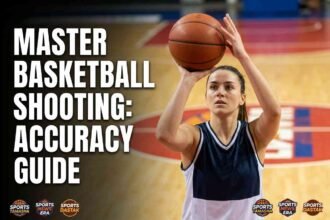


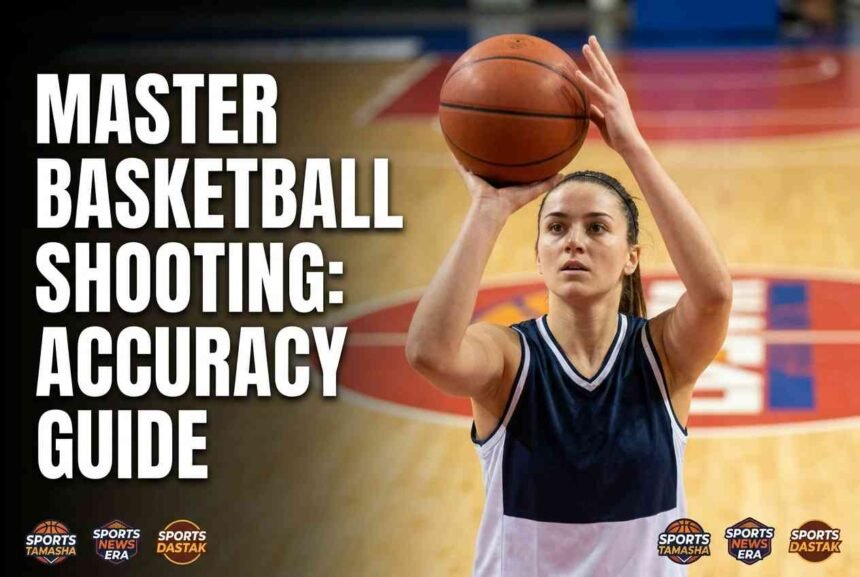
If you want to know how to shoot a basketball with real accuracy, you need more than luck and raw talent. Shooting is a skill built from repeatable mechanics, smart practice, and mental discipline. Whether you are a beginner picking up a ball for the first time, a high school player trying to raise your field goal percentage, or a parent coaching your child’s youth team, this guide walks you through everything step by step.
In this article, you will learn the correct shooting stance, hand placement, shooting motion, common mistakes, and the best drills used by professional trainers. We will also cover the mental side of shooting, because confidence often matters as much as form. By the end, you will have a complete roadmap for how to shoot a basketball like a consistent, high-percentage scorer.
Basketball fans who want the latest match updates and player performance breakdowns can also check the sports coverage at Sports Tamasha for more context on how professional shooters perform under pressure.
Table of Contents
- Why Shooting Form Matters
- The Basics of a Basketball Shot
- Proper Basketball Shooting Stance
- Hand Placement and Grip
- The Shooting Motion Step by Step
- The BEEF Method Explained
- Types of Basketball Shots
- Common Mistakes When Shooting a Basketball
- Basketball Shooting Drills to Improve Accuracy
- The Mental Side of Shooting
- Equipment and Court Setup Tips
- How Professional Players Shoot Differently
- How to Practice Shooting at Home
- Fitness and Nutrition for Better Shooting
- Frequently Asked Questions
- Conclusion
1. Why Shooting Form Matters
Good shooting form is not just about looking smooth on the court. It directly affects your consistency, your range, and how quickly you can get your shot off before a defender closes in. Players with clean mechanics tend to shoot a higher percentage over a full season because their shot does not break down under fatigue or pressure.
Poor form, on the other hand, forces you to rely on strength and adrenaline rather than repeatable technique. That works fine in a casual game, but it falls apart in competitive situations. This is why every serious guide on how to shoot a basketball starts with fundamentals, not tricks.
Think of your shooting form as a template. Once your muscles memorize the correct movement pattern, you can repeat it thousands of times with very little mental effort. That is the entire goal of proper technique: turning a complex skill into an automatic habit.
2. The Basics of a Basketball Shot
Before diving into stance and hand placement, it helps to understand the three phases every basketball shot goes through:
- Preparation phase: getting your feet, hips, and hands ready before you even begin to raise the ball.
- Release phase: the upward motion where the ball leaves your hand.
- Follow-through phase: what happens after the ball leaves your fingertips, which affects backspin and arc.
Each phase depends on the one before it. If your preparation is rushed or unbalanced, your release will be inconsistent no matter how good your follow-through looks. This is why coaches spend so much time on setup before ever discussing the actual release.
Understanding these three phases will make every section below easier to apply, because you will know exactly which phase a tip is trying to improve.
3. Proper Basketball Shooting Stance
Your stance is the foundation of your shot. Without a balanced base, even perfect hand mechanics will not produce a consistent result.
Foot Placement
Start with your feet shoulder-width apart. Your shooting-side foot (right foot for right-handed shooters) should be slightly ahead of your other foot, pointing toward the basket. This staggered stance helps square your shoulders to the rim and gives you a stable platform to push off.
Avoid placing your feet perfectly parallel, since this can cause your shoulders to drift sideways during the shot. A slight stagger keeps your alignment consistent shot after shot.
Balance and Body Alignment
Bend your knees slightly and keep your weight centered over the balls of your feet, not your heels. Your hips, shoulders, and shooting elbow should all line up toward the basket. Many beginners lean back during the shot to generate extra power, but this actually reduces accuracy because it changes your center of gravity mid-motion.
A simple way to check your alignment is to imagine a straight line running from your shooting foot through your knee, hip, shoulder, and elbow, all the way to the rim. When that line is straight, your shot has a much higher chance of going in.
If you want to see how top athletes maintain balance even while contested, match highlights and slow-motion breakdowns are often covered on Sports News Era, which is a useful resource for visual learners.
4. Hand Placement and Grip
The Shooting Hand
Place your shooting hand directly under the ball, with your fingers spread comfortably and the ball resting on your fingertips and finger pads, not your palm. There should be a small gap between your palm and the ball, roughly the width of a pencil. This gap allows for better ball control and cleaner backspin.
Your elbow should be tucked in, forming close to a 90-degree angle at your side, not flared outward. An elbow that sticks out to the side will push the ball off-line, causing shots to drift left or right depending on your dominant hand.
The Guide Hand (Off-Hand)
Your guide hand rests gently on the side of the ball, purely for balance. It should not push or add force during the release. A very common mistake is using the guide hand to “help” shoot, which introduces side-spin and inconsistency.
A good test: if you removed your guide hand right before releasing the shot, the ball should still go in the same direction. If it veers off course, your guide hand is doing too much work.
5. The Shooting Motion Step by Step
Now that your stance and grip are set, here is the shooting motion broken into clear steps:
- Catch or gather the ball in a low, ready position with knees already slightly bent.
- Bring the ball up in one smooth motion to your set point, usually just above your forehead or eyebrow level.
- Bend your knees for power as the ball reaches your set point.
- Extend upward through your legs, core, and shooting arm in one fluid chain.
- Release the ball at the peak of your extension, snapping your wrist downward.
- Follow through by holding your shooting hand in the air until the ball reaches the rim.
The entire motion should feel like one continuous wave of energy moving from your legs, through your core, and out through your fingertips. Choppy or segmented shots usually come from disconnecting these steps, such as shooting with your arm alone while your legs stay still.
6. The BEEF Method Explained
Many youth coaches teach shooting using the acronym BEEF, which stands for:
- B – Balance: Feet set, knees bent, weight centered.
- E – Eyes: Focus on the rim, specifically the front or back of the hoop, not the backboard (unless shooting a bank shot).
- E – Elbow: Keep your shooting elbow tucked under the ball, not flared out.
- F – Follow-through: Snap the wrist and hold the finish until the ball lands.
BEEF is popular because it is easy to remember during live-game pressure. When your shot feels off, running through these four checkpoints usually reveals exactly what broke down.
7. Types of Basketball Shots
Learning how to shoot a basketball also means understanding that different situations call for different shot types.
Jump Shot
The standard mid-range or perimeter shot, where you jump straight up and release the ball near the top of your jump. Consistency in your jump timing is more important than jump height.
Free Throw
An unguarded shot from the free-throw line. Because there is no defender, free throws are almost entirely about repeatable mechanics and a consistent pre-shot routine.
Layup
A close-range shot taken while driving to the basket, usually off one foot, using the backboard or a soft touch to finish. Footwork matters more here than arm mechanics.
Three-Point Shot
Taken from beyond the three-point line, this shot requires more leg drive since the extra distance cannot come from the arm alone. Players who try to “arm” a three-pointer often lose accuracy because they compensate with awkward wrist snaps.
Bank Shot
A shot aimed at a specific spot on the backboard so it bounces into the basket. This is especially useful at moderate angles from the baseline, where the backboard acts as a larger, more forgiving target.
For breakdowns of how different professional players favor certain shot types, sports analysis features on Sports Dastak often cover shot-selection trends across different leagues.
8. Common Mistakes When Shooting a Basketball
Even players who know the theory often repeat the same errors. Watch out for these:
- Flat shot with no arc: Shots that travel in a straight line rather than arcing downward into the hoop have a smaller margin for error. Aim for a higher, softer arc.
- Elbow flaring out: This pushes shots off-target horizontally.
- Guide hand interference: Causes side-spin and inconsistent direction.
- Rushing the release: Especially common under defensive pressure, leading to broken mechanics.
- Inconsistent set point: Bringing the ball to a different height every time makes muscle memory unreliable.
- Leaning back on release: Reduces power transfer from the legs and hurts range.
- Not following through: Cutting the motion short right after release reduces backspin and control.
Fixing even one or two of these issues can noticeably improve shooting percentage within a few weeks of focused practice.
9. Basketball Shooting Drills to Improve Accuracy
Reading about how to shoot a basketball only goes so far. Real improvement comes from repetition. Below are drills used by coaches at every level.
Form Shooting Drill
Stand close to the basket, roughly 3 to 5 feet away, and shoot using only correct mechanics: balanced stance, tucked elbow, full follow-through. Do not worry about power, since you are close enough that a soft push should be enough. Once you make 10 in a row with perfect form, take one step back.
One-Hand Shooting Drill
Shoot using only your shooting hand, without your guide hand on the ball at all. This isolates and strengthens correct shooting-hand mechanics and quickly reveals bad habits.
Spot Shooting
Pick five spots around the key: both corners, both wings, and the top of the key. Make five shots from each spot before moving to the next. This builds consistency across different angles, not just straight-on shots.
Free Throw Routine Drill
Develop a consistent pre-shot routine (for example: two dribbles, a deep breath, eyes on the rim) and repeat it for 50 free throws every practice session. Consistency in your routine leads to consistency in your results, especially in high-pressure moments.
Off-the-Dribble Shooting
Since game shots rarely come from a standstill, practice dribbling into your shot from different angles. This builds the balance needed to shoot cleanly even after movement.
Fatigue Shooting
At the end of a workout, when your legs are tired, take another set of shots. This trains your body to keep proper form even when fatigued, which is exactly how shots are taken late in real games.
10. The Mental Side of Shooting
Shooting a basketball is as much psychological as it is physical. Confidence changes how loose and fluid your motion is, while doubt tends to create tension in the shoulders and wrist, both of which hurt accuracy.
A few mental habits that help:
- Have a routine. A consistent pre-shot routine reduces overthinking and creates a trigger for your body to execute the same motion every time.
- Shoot with target focus, not outcome focus. Concentrate on the rim and your mechanics, not on whether the shot will go in.
- Let misses go quickly. Dwelling on a missed shot often affects the next attempt. Reset with a breath and move on.
- Visualize success. Many top shooters mentally rehearse the shot going in before they even catch the ball.
Confidence is built through repetition. The more correct shots you take in practice, the more natural trust you develop in your own mechanics during real games.
11. Equipment and Court Setup Tips
Your equipment can also affect how well you learn and practice shooting.
- Ball size: Use a size appropriate for your age group; youth players should not train exclusively with a full-size ball, since it can encourage poor mechanics like flaring elbows to generate power.
- Hoop height: Lowering the hoop for younger or beginner players helps them learn proper form without straining for extra power.
- Shoes: Proper basketball shoes with good ankle support help maintain balance during your stance and landing.
- Practice space: A clean, consistent shooting spot (same hoop, similar lighting, similar backdrop) helps early learners build muscle memory faster than constantly switching environments.
None of these factors replace good mechanics, but they remove unnecessary obstacles while you are building your shot.
12. How Professional Players Shoot Differently
Watching professional shooters reveals subtle differences beyond raw fundamentals. Elite shooters typically show:
- Extremely quick release times, often under half a second, developed through thousands of reps.
- Minimal wasted motion, meaning the ball travels the shortest possible path from gather to release.
- High, consistent arc, which increases the effective size of the rim opening for the ball.
- Balanced landings, usually landing in almost the same spot they jumped from, showing controlled vertical force rather than drifting forward or sideways.
Studying these patterns in game footage can help intermediate players identify small tweaks to their own shot. Match replays and player-specific shooting stats are frequently discussed in the basketball sections of Sports Tamasha and Sports News Era, both of which are useful if you want to study real shooting form in game situations rather than just practice drills.
13. How to Practice Shooting at Home
You do not need a full court to improve your shot. Here is how to practice effectively with limited space:
- Mirror work: Practice your shooting motion in front of a mirror without a ball to check elbow alignment and follow-through.
- Wall form shooting: Stand close to a wall and shoot softly upward, focusing purely on wrist snap and backspin.
- Chair shooting drill: Sit in a chair and practice the release and follow-through motion repeatedly to isolate arm mechanics without leg involvement.
- Small hoop training: A mini hoop and soft ball, even indoors, can reinforce proper wrist snap and arc on a smaller scale.
- Resistance band work: Light resistance bands can help strengthen the specific shoulder and wrist muscles used in shooting.
Consistent short sessions, even 15 to 20 minutes a day, tend to build better habits than occasional long sessions, since your body needs frequent repetition to lock in muscle memory.
14. Fitness and Nutrition for Better Shooting
Physical conditioning plays a bigger role in shooting than most beginners realize. Tired legs cannot generate consistent lift, which forces players to compensate with their arms, breaking down form exactly when it matters most, such as late in a game.
- Leg strength: Squats, lunges, and calf raises support the leg drive needed for range and consistency.
- Core stability: A strong core keeps your body aligned during the shot, preventing unnecessary drift.
- Shoulder and wrist mobility: Stretching and light strength work in these areas support a smoother, more relaxed release.
- Hydration and nutrition: Staying hydrated and maintaining balanced nutrition helps sustain focus and muscle control during longer practice sessions or games.
Pairing physical conditioning with technical practice tends to produce faster, more lasting improvement than technical drills alone.
14.5. Troubleshooting a Shooting Slump
Every player, from beginners to professionals, goes through stretches where shots that normally fall just will not go in. Instead of panicking or overhauling your entire shot, work through this troubleshooting checklist:
- Check your set point first. A slump often starts because the ball is being brought up to a slightly different height than usual, throwing off your timing.
- Record yourself. Filming your shot from the side and from behind the basket reveals flaws that are almost impossible to feel in real time, such as a slightly flared elbow or a rushed release.
- Go back to form shooting. Return to close-range, slow-motion reps to rebuild the correct feeling before adding distance back in.
- Rule out fatigue. Sometimes a slump is simply tired legs failing to generate lift, which forces compensation higher up the body.
- Rule out equipment changes. A different ball, a different hoop height, or new shoes can subtly change your rhythm without you realizing it.
- Stay patient. Mechanical slumps typically resolve within one to two weeks of disciplined, low-volume, high-focus practice, rather than simply shooting more without correcting the underlying issue.
Treating a slump as a mechanical puzzle, rather than a confidence problem, usually leads to a faster and more permanent fix.
14.6. Shooting Differences for Youth, High School, and Adult Players
While the core mechanics of how to shoot a basketball stay consistent across age groups, coaches typically adjust a few details depending on the player’s stage of development.
Youth players (under 10): Focus almost entirely on form over distance. Coaches often lower the hoop and use a smaller, lighter ball so kids can shoot with proper mechanics instead of “heaving” the ball with poor technique just to reach the rim.
Middle and high school players: This is usually when strength training and structured shooting drills become more important, since players are physically capable of extending their range but still need to reinforce clean mechanics before adding volume and distance, especially for the three-point shot.
Adult and competitive players: At this level, the emphasis shifts toward game-speed shooting: shooting off the dribble, shooting under fatigue, and shooting with a hand in your face. Pure form shooting drills still matter, but they are typically combined with live, game-like repetitions.
Understanding which stage you or your player is in helps you choose the right drills from the list above, rather than applying advanced techniques too early or basic drills for too long.
14.7. Building a Personal Shooting Routine
A structured weekly routine turns scattered practice into measurable improvement. A simple, balanced weekly plan might look like this:
- Day 1: Form shooting close to the rim, plus one-hand shooting drill, focusing purely on mechanics.
- Day 2: Spot shooting from five locations around the key, tracking makes out of a set number of attempts.
- Day 3: Free throw routine drill, at least 50 attempts, with full focus on the pre-shot routine.
- Day 4: Off-the-dribble shooting combined with light conditioning work for legs and core.
- Day 5: Fatigue shooting at the end of a full workout, simulating late-game tiredness.
- Day 6: Game-speed shooting with a partner or rebounder, including contested shots if possible.
- Day 7: Rest, mobility work, and mental visualization of your shot going in.
Tracking your makes and misses in a simple notebook or phone app over several weeks gives you concrete data on where you are improving and which drills are producing the biggest gains.
15. Frequently Asked Questions
Q1: How long does it take to improve basketball shooting form? Most players notice measurable improvement within 3 to 6 weeks of consistent, focused practice, though full muscle memory can take several months to feel fully natural.
Q2: Should beginners shoot with one hand or two? Beginners should focus on shooting primarily with one hand (the shooting hand), using the guide hand only for light support, not power.
Q3: Why does my shot keep going to the left or right? Sideways misses are usually caused by a flared elbow or an overactive guide hand pushing the ball off-line during release.
Q4: What is the ideal shooting arc? A slightly higher arc, generally around 45 to 55 degrees, gives the ball a larger effective target area at the rim compared to a flat shot.
Q5: How can I increase my shooting range without hurting my form? Build range gradually by strengthening your legs and core so extra power comes from your lower body, not from altering your upper-body mechanics.
Q6: Does shooting form differ for taller or shorter players? The core mechanics stay the same, though taller players may have a naturally higher release point, while shorter players often rely more on quick release and arc to shoot over defenders.
Q7: How many shots should I practice per day? Serious players often aim for 200 to 500 makes per day, broken into different drills, though quality of form matters far more than raw volume.
Q8: Can I fix my shooting form on my own, or do I need a coach? Many players do improve on their own using video feedback, mirror work, and structured drills, but a coach or experienced trainer can spot subtle flaws faster and help you avoid reinforcing bad habits over time.
Q9: Why does my shot feel fine in practice but break down in games? Game-speed pressure, defenders, and fatigue all introduce variables that practice alone does not fully replicate. Adding contested and fatigue-based drills, as covered earlier in this guide, helps close that gap between practice and game performance.
Learning how to shoot a basketball is a gradual process built on stance, grip, motion, and repetition. Start with the fundamentals: a balanced stance, correct hand placement, and a smooth, connected shooting motion. Use the BEEF method as a quick mental checklist, and work through structured drills like form shooting, spot shooting, and free throw routines to build consistency.
Do not overlook the mental side of the game. Confidence, focus, and a reliable pre-shot routine often separate good shooters from great ones. Combine that with basic fitness work for your legs, core, and shoulders, and you will have a complete, well-rounded approach to shooting improvement.
Keep practicing with intention, track your progress, and revisit these fundamentals often, since even professional players continually return to basics to keep their shot sharp. For ongoing basketball coverage, player breakdowns, and match analysis that can help you study real shooting technique in action, check out Sports Tamasha, Sports News Era, and Sports Dastak.