

Formula 1 Explained: How a Grand Prix Weekend Works
Formula 1 sits at the intersection of elite athleticism, cutting-edge engineering, and global spectacle. Every season, ten teams and twenty drivers travel across continents chasing two championships — one for drivers, one for constructors — in a sport where a tenth of a second can separate victory from anonymity. For newcomers, understanding how a race weekend actually unfolds is the quickest way into the sport.
The Basics of a Grand Prix Weekend
A typical Formula 1 weekend runs across three days. Friday is dedicated to practice sessions, where teams gather data, test setups, and drivers build familiarity with the circuit. Saturday features qualifying, a knockout-style session split into three segments (Q1, Q2, and Q3) that determines the starting grid for Sunday’s race, with the fastest driver in Q3 earning pole position. Some weekends also include a Sprint format, a shorter standalone race that awards championship points and can influence, but does not directly set, the grid for the main Grand Prix.
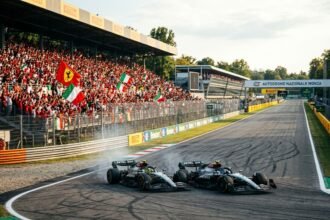
Sunday is race day, when drivers compete over a fixed number of laps calculated to total approximately 305 kilometres (except at Monaco, which runs a shorter distance). Points are awarded to the top ten finishers, with the winner earning 25 points, second place 18, and so on down to a single point for tenth. An additional point is awarded for the fastest lap, provided the driver finishes in the top ten.
The Two Championships
Formula 1 crowns two champions each season. The Drivers’ Championship is awarded to the driver who accumulates the most points across the season, while the Constructors’ Championship is awarded to the team whose two drivers combine to score the most points. The constructors’ title carries significant financial weight, as prize money distribution from Formula 1’s commercial rights holder is heavily influenced by a team’s finishing position in this standings table.
Cars, Regulations, and Engineering
Formula 1 cars are single-seat, open-wheel machines built to strict technical regulations set by the FIA, motorsport’s global governing body. These regulations cover everything from chassis dimensions and aerodynamic components to power unit specifications, and they are periodically overhauled to control costs, improve safety, and encourage closer racing. The current generation of power units combines a turbocharged internal combustion engine with hybrid energy recovery systems, reflecting the sport’s gradual shift toward more sustainable technology.
Aerodynamics remain central to competitiveness. Because so much lap time is generated through how efficiently a car manages airflow, wind tunnel testing and computational fluid dynamics are restricted by regulation to prevent the highest-spending teams from gaining an insurmountable advantage, part of a broader cost-cap system introduced to level the financial playing field between teams.
Strategy: The Hidden Race Within the Race
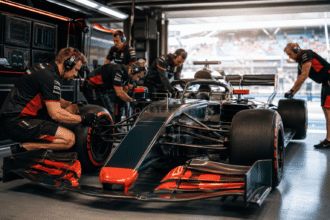
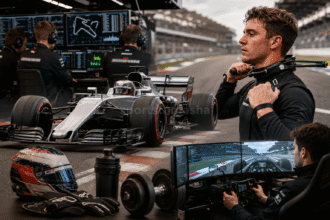
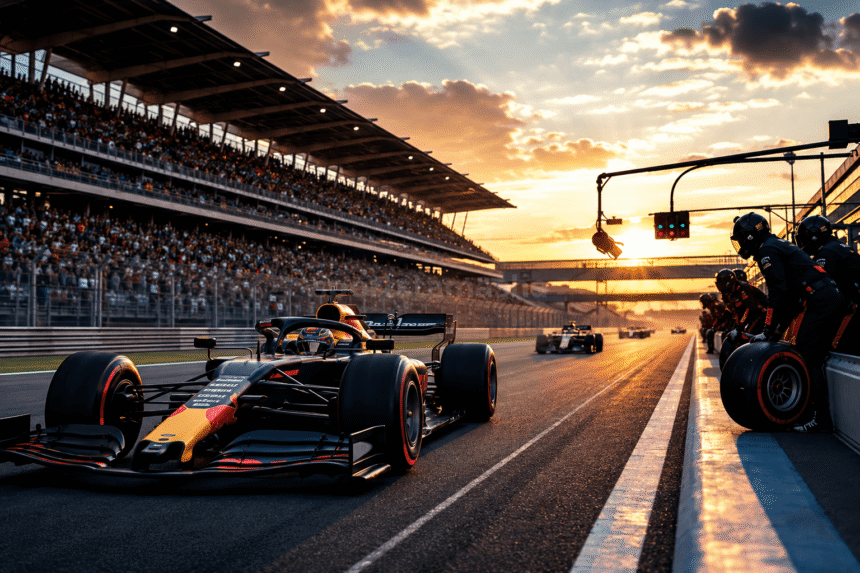
Beyond outright speed, race strategy plays a decisive role in Formula 1 outcomes. Teams must decide tyre compounds, pit stop timing, and whether to prioritise track position or tyre freshness, often adjusting in real time based on safety car periods, weather changes, or a rival’s strategy. Pit crews are trained to change all four tyres in under three seconds, a level of precision that turns the pit lane into its own high-stakes competitive arena.
Tyre supplier Pirelli produces multiple compounds of varying hardness for each race weekend, and regulations typically require drivers to use at least two different dry-weather compounds during a race, forcing at least one mandatory pit stop and adding a layer of strategic complexity to every Grand Prix.
The Global Calendar
The modern Formula 1 calendar spans roughly two dozen races across five continents, from the historic street circuit at Monaco to newer additions in the Middle East and Americas. This global footprint has been a major driver of the sport’s commercial growth, exposing Formula 1 to new fan bases and sponsorship markets far beyond its traditional European heartland.
Why Formula 1’s Popularity Has Surged
Formula 1’s audience has grown substantially over the past several years, driven in part by behind-the-scenes documentary coverage that introduced casual viewers to the personalities and rivalries within the paddock, alongside expansion into new markets such as the United States, where multiple races now feature on the calendar. This growth has attracted a wider range of sponsors beyond traditional motorsport partners, including technology, fashion, and consumer lifestyle brands eager to reach Formula 1’s increasingly diverse and youthful audience.
Safety in Modern Formula 1
Safety has been one of the sport’s defining priorities for decades, driven by continuous improvements in circuit design, car construction, and driver protection systems such as the halo device, which shields drivers’ heads from debris and impact. The FIA continually reviews incidents to refine regulations, a process that has dramatically reduced serious injuries compared to earlier eras of the sport.
Frequently Asked Questions
How many teams compete in Formula 1? Ten teams, each fielding two drivers, currently compete across a season.
What is the difference between a Sprint and the main race? A Sprint is a shorter race held on Saturday at select events, awarding championship points on its own scale, while the main Grand Prix on Sunday remains the primary points-scoring race of the weekend.
Why do drivers have to make pit stops? Regulations typically require the use of at least two different tyre compounds during a dry race, forcing at least one mandatory pit stop, while strategic stops also help manage tyre wear over a race distance.
How is the Constructors’ Championship different from the Drivers’ Championship? The Drivers’ Championship ranks individual drivers by points scored, while the Constructors’ Championship ranks teams by the combined points of both their drivers.
From the precision of a three-second pit stop to the split-second strategy calls made on the pit wall, Formula 1 rewards a rare combination of driver skill, engineering excellence, and tactical nerve — which is exactly why it continues to draw new fans into its ecosystem season after season.
The Championship Battle Across a Season
A Formula 1 season typically unfolds as a cumulative points battle stretching across roughly two dozen race weekends, meaning consistency across the full calendar often proves just as important as individual race wins when it comes to ultimately securing a championship. Drivers and teams must balance aggressive point-scoring opportunities against the risk of costly retirements or penalties that could significantly damage their overall championship position. This long-form competitive structure rewards sustained excellence and reliability alongside outright speed, distinguishing genuine championship contenders from teams capable of occasional standout race-day performances.