

Beyond the Big Leagues: Rising Sports Worth Following
While cricket, football, basketball, and a handful of other major leagues dominate global sports media attention, a wide range of other sports continue to build passionate, dedicated fanbases of their own. From combat sports to motorsport disciplines beyond Formula 1, understanding this broader sporting landscape reveals just how diverse competitive sport actually is.
Kabaddi: A Traditional Sport Turned Modern Spectacle
Few sporting transformations illustrate the power of smart league packaging better than kabaddi’s rise in India. Rooted in ancient South Asian tradition, kabaddi is a contact sport requiring a single “raider” to cross into an opponent’s half, tag defenders, and return to their own side, all while holding their breath and chanting continuously, testing a rare combination of strength, agility, and lung capacity. The launch of a professional franchise league brought television production values, city-based team branding, and celebrity ownership to a sport that had previously existed largely at the grassroots level, dramatically increasing its visibility and commercial viability within just a few years.
Combat Sports: MMA and Boxing
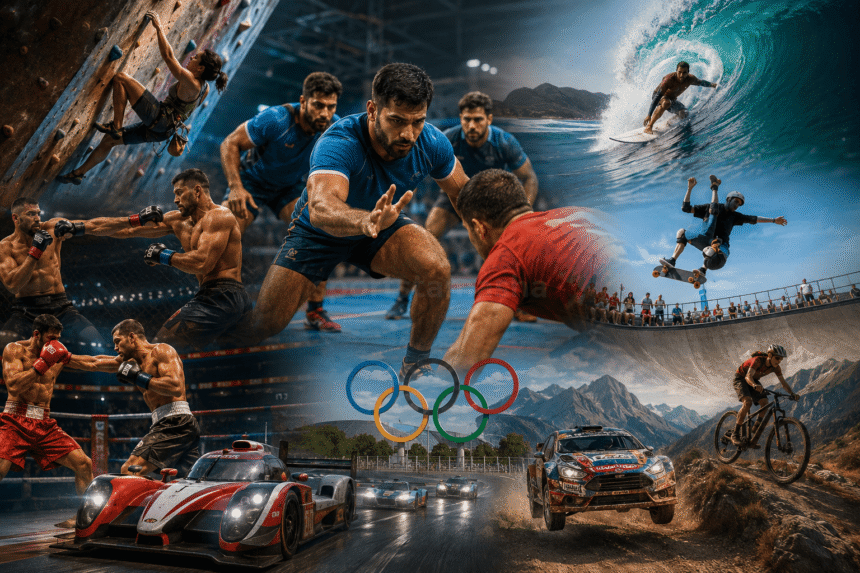
Mixed martial arts has grown from a niche, often controversial pursuit into one of the fastest-growing sports globally, combining elements of wrestling, boxing, jiu-jitsu, and various striking disciplines into a single competitive format. Its growth has been driven substantially by sophisticated event promotion, compelling athlete storytelling, and a highly engaged digital fanbase that consumes content well beyond scheduled fight nights.
Boxing, despite operating with a more fragmented promotional and sanctioning body structure than most major sports, continues to draw significant pay-per-view interest for marquee bouts, retaining a unique cultural weight tied to its long history and tradition of producing genuinely global superstar athletes.
Motorsport Beyond Formula 1
While Formula 1 dominates motorsport headlines, other racing disciplines maintain substantial, dedicated followings. Rally racing tests drivers across varied, often extreme terrain and weather conditions rather than closed circuits, rewarding a different skill set centred on adaptability and car control on unpredictable surfaces. Endurance racing, featuring events that run continuously for 24 hours or more, tests both machine reliability and driver stamina in ways sprint-format racing simply cannot replicate.
Olympic and Multi-Sport Events
The Olympic Games remain one of the few genuinely global multi-sport platforms, bringing together disciplines ranging from athletics and swimming to sports with comparatively smaller standalone followings, such as fencing, archery, and modern pentathlon. For athletes in these less commercially prominent sports, the Olympics often represents their primary opportunity for mainstream visibility, funding, and sponsorship interest, concentrated into a single, intensely competitive multi-week window every four years.
Why Niche Sports Matter Commercially
Brands increasingly recognise value in sponsoring emerging or niche sports, often at a considerably lower cost than major league sponsorship, while still reaching genuinely passionate, engaged fan communities. Early sponsorship association with a growing sport can also position a brand favourably if that sport later experiences significant mainstream growth, a strategic bet some sponsors have made successfully with sports that later broke into wider popularity.
The Role of Digital Media in Growing Niche Sports
Streaming platforms and social media have fundamentally changed the growth trajectory available to smaller sports, removing the traditional broadcast gatekeeping that once limited exposure to whichever sports television networks chose to prioritise. Sports with previously limited mainstream broadcast access can now build dedicated global audiences directly through digital platforms, a shift that has been instrumental in the growth of everything from competitive gaming to previously obscure endurance sports.
Women’s Participation Across Emerging Sports
Many sports outside the traditional “big league” category have also made significant strides in growing dedicated women’s competitions and professional pathways, often achieving more balanced investment and visibility between men’s and women’s competition than some more established traditional sports. This growth reflects broader shifts across the sporting world toward recognising and investing in women’s sport as a genuine commercial and competitive category in its own right, rather than a secondary consideration.
Frequently Asked Questions
Why has kabaddi’s popularity grown so significantly in recent years? The introduction of a professional franchise league brought improved production quality, city-based team branding, and significant marketing investment to a sport that had previously operated mostly at the grassroots level.
What makes endurance racing different from standard motorsport events? Endurance races run continuously for extended periods, often 24 hours or more, testing both machine reliability and driver stamina in ways that shorter sprint-format races do not.
Why do brands sponsor smaller or emerging sports? Sponsorship costs are typically lower than in major leagues, while still offering access to genuinely passionate, engaged fan communities, and can position a brand favourably if the sport later grows in mainstream popularity.
How has digital media changed the growth potential of niche sports? Streaming and social media platforms have removed traditional broadcast gatekeeping, allowing sports with limited television access to build dedicated global audiences directly through digital channels.
The sporting world extends far beyond its most commercially dominant leagues, and the continued growth of these other sports reflects a broader trend toward diversified fan interest, digital-first audience building, and increasingly sophisticated sponsorship strategy across the entire sports industry.
The Growing Appeal of Adventure and Extreme Sports
Beyond traditional competitive formats, adventure and extreme sports such as rock climbing, surfing, and skateboarding have built dedicated global followings of their own, several of which have gained additional mainstream visibility through recent Olympic inclusion. These sports often carry a distinctive cultural identity tied closely to their originating communities, blending competitive achievement with lifestyle and artistic expression in a way that differentiates them from more traditionally structured team sports, and continuing to attract younger audiences drawn to their individuality and visual appeal on social media platforms.
Cross-sport athlete transitions, where competitors move between disciplines such as athletics and bobsled, or rugby and American football, also occasionally generate significant mainstream interest, highlighting the transferable physical qualities that connect otherwise distinct competitive sporting disciplines.
Community-level participation in many of these sports also plays an important role in sustaining long-term interest, as grassroots involvement often translates directly into stronger emotional investment in the professional or elite competitive tier of the same sport.