


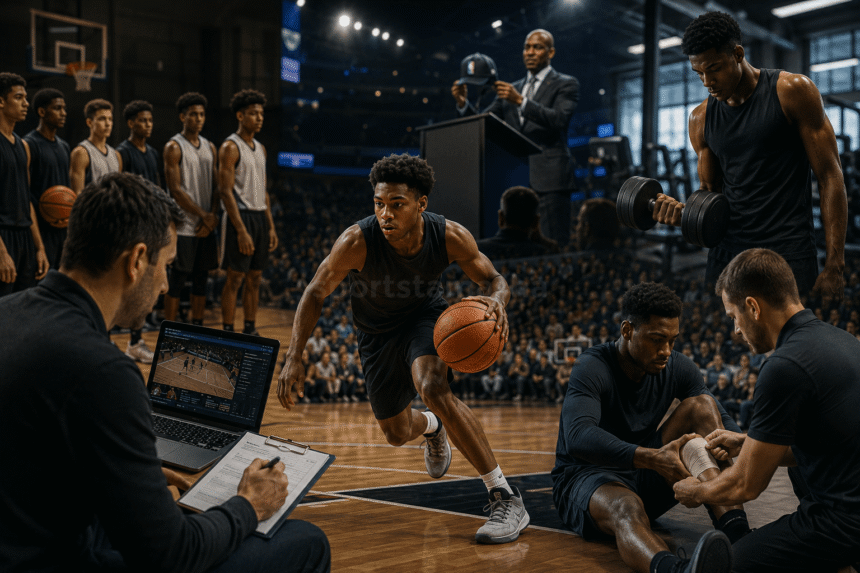
How NBA Players Are Scouted, Drafted and Developed
Making it to the NBA represents the culmination of years of development, competition, and refinement for even the most naturally gifted basketball players. With only a limited number of active roster spots available across the league at any given time, the pathway from promising young athlete to established professional is both highly structured and intensely competitive.
Where NBA Talent Comes From
Historically, the dominant pathway into the NBA has run through American college basketball, where players spend one or more seasons competing at the NCAA level, building both their skills and their public profile before entering the draft. In recent years, alternative pathways have grown in prominence, including dedicated professional development leagues designed specifically to prepare elite young players for the NBA without requiring a traditional college route, as well as international leagues that have become increasingly significant sources of NBA talent.
International basketball has become an especially important talent pipeline, with players developing through structured club academy systems in Europe and elsewhere before making the jump to the NBA, often arriving with a level of tactical sophistication shaped by different playing philosophies than those typically emphasised in the American development system.
The Scouting Process
NBA teams maintain extensive scouting departments dedicated to evaluating prospects across college basketball, international leagues, and youth development competitions. Modern scouting combines traditional in-person evaluation — assessing a player’s skill, basketball IQ, and competitive character — with increasingly sophisticated statistical analysis measuring efficiency, shot selection tendencies, and defensive impact metrics that aren’t always visible through simple box score statistics.
Physical testing, including measurements of size, wingspan, vertical leap, and lateral quickness, also plays a role in evaluation, particularly for prospects whose statistical production may not fully capture their long-term physical potential and projected development curve as professional athletes.
The NBA Draft
The NBA Draft is the primary formal mechanism through which new talent enters the league, typically held annually with teams selecting players in an order largely determined by the previous season’s standings, with a lottery system in place for non-playoff teams to help balance competitive fairness. Draft position carries significant career implications, as it directly affects a player’s initial team environment, playing opportunity, and the level of organisational investment placed in their development.
Draft evaluation is notoriously difficult to get right, with basketball history full of examples of highly-rated prospects who failed to develop as expected, and lower-drafted players who significantly outperformed their draft position, a reminder that physical tools and college production don’t always translate cleanly into NBA-level success.
Physical and Skill Development Once Drafted
Even highly talented draft picks typically require significant additional development once they reach the NBA, given the substantial gap in speed, physicality, and tactical sophistication between college or international basketball and the professional game. Teams invest heavily in individualised player development programmes, combining strength and conditioning work, skill-specific coaching, and film study to help young players adjust to the demands of professional competition.
Many players spend time with their team’s developmental league affiliate early in their careers, gaining additional playing time and targeted skill development in a lower-pressure environment before earning a consistent NBA rotation role.
Building a Long-Term NBA Career
Career longevity in the NBA depends on a combination of factors beyond raw talent: physical durability, the ability to adapt one’s game as physical attributes change with age, and increasingly, versatility across multiple roles and playing styles as the game’s tactical demands continue to evolve. Players who successfully extend their careers often do so by developing complementary skills — improved outside shooting, defensive versatility, or playmaking ability — that keep them valuable even as their athletic peak passes.
Life Off the Court
Modern NBA players are also expected to manage significant off-court responsibilities, including media obligations, personal brand building through social media, and increasingly, business and investment interests that extend well beyond their playing careers. Many players view their NBA careers as a platform for broader business and philanthropic ventures, with financial literacy and career planning support now commonly provided by both the league and players’ associations to help athletes prepare for life after their playing days end.
Frequently Asked Questions
Do all NBA players come through American college basketball? No, while college basketball remains a major pathway, an increasing number of players enter the league through international leagues, professional development pathways, and other alternative routes.
How significant is draft position for a player’s career? Draft position can meaningfully affect a player’s early career opportunities and team environment, though basketball history includes many examples of players who significantly outperformed or underperformed relative to where they were originally drafted.
What role does a team’s developmental league affiliate play? It provides young or developing players with additional game experience and targeted skill development in a lower-pressure setting before they take on a consistent NBA rotation role.
Why do NBA players need to develop skills beyond raw athleticism? Because physical peak inevitably declines with age, players who successfully extend their careers typically do so by adding complementary skills, such as improved shooting or playmaking, that maintain their value as they get older.
From youth development leagues to the bright lights of the NBA Finals, the journey to becoming a professional basketball player reflects a demanding, multi-year process of physical, technical, and mental refinement — one that only a small fraction of aspiring players ever complete.
Injury Management and Career Preservation
Injury prevention and management have become an increasingly sophisticated part of an NBA player’s career, with teams employing dedicated medical and sports science staff to monitor player workload and reduce long-term injury risk across an demanding 82-game season. Load management strategies, involving carefully planned rest days for key players, have become more common as teams and players alike prioritise long-term health and playoff performance over maximising every individual regular season appearance. This shift reflects a broader recognition across the league that protecting player health is essential to sustaining both individual careers and overall team competitiveness deep into the postseason.