


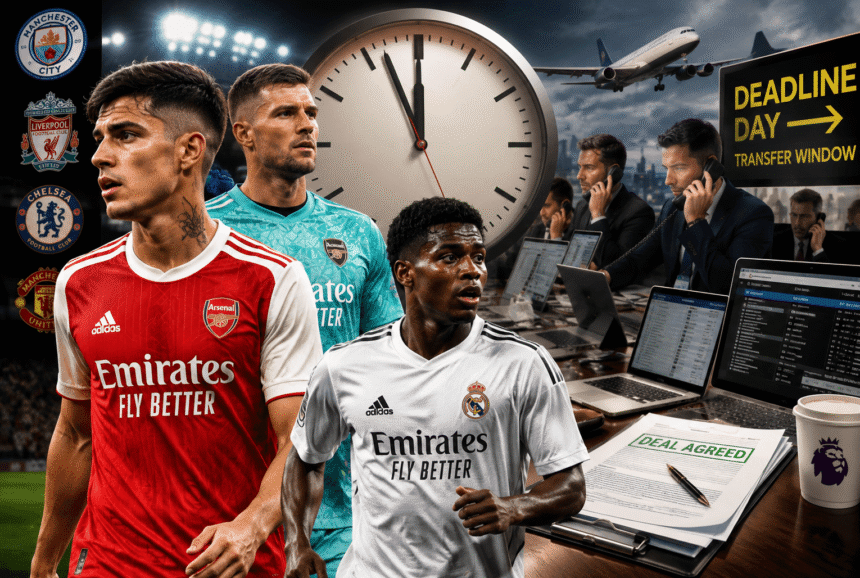
Another summer, another frantic scramble to the finish line. The Premier League transfer window 2026 officially opened on June 15 and slammed shut at 11pm UK time on Tuesday, September 1, capping off months of speculation, medicals, and last-minute scrambles across England’s top flight.
With clubs given a two-hour grace period to submit paperwork after the deadline via official deal sheets, some business technically wrapped up even after the clock struck eleven. Here’s a full breakdown of how the window shaped up.
Key Dates Every Fan Should Know
Before diving into the deals themselves, it’s worth understanding how this year’s window was structured compared to recent seasons.
A Return to the Traditional Deadline
After two windows using an earlier 7pm cutoff to give club staff a more normal working pattern, the Premier League and EFL reverted to the traditional 11pm deadline this summer. Clubs that submitted a formal deal sheet before the clock struck eleven were given an additional two hours to finalize the paperwork, which is why some deals were confirmed well after the headline deadline had technically passed.
Different Leagues, Different Clocks
Not every league in Europe worked to the same timeline:
- Premier League & EFL: Closed 11pm, September 1
- La Liga: Closed 10:59pm, September 1
- Serie A: Closed 8pm, September 1
- Bundesliga: Closed 7pm, August 31
- Ligue 1: Closed August 31
- Women’s Super League & Scottish Premiership: Closed 5pm, September 3
This staggered structure meant certain deals involving European clubs came down to the wire in more than one market simultaneously.
Arsenal Strengthen Their Spine
Arsenal were among the more active Premier League clubs this summer. They brought in goalkeeper Illan Meslier on a free transfer from Leeds and paid roughly £34.5 million to sign centre-back Piero Hincapie from Bayer Leverkusen, directly addressing two positions that had been under scrutiny in recent seasons.
On the outgoing side, Arsenal moved on Jakub Kiwior to Porto for around £14.7 million, sold goalkeeper Karl Hein to Werder Bremen, and let winger Leandro Trossard depart for Besiktas. Several academy graduates, including Ethan Nwaneri, also returned from loan spells at clubs like Marseille.
The European Angle: A World Cup-Shaped Market
This year’s transfer window was reshaped by the aftermath of the 2026 FIFA World Cup, which influenced valuations and priorities across Europe’s top leagues. Real Madrid’s headline-grabbing move for teenage Ivorian sensation Yan Diomande from RB Leipzig set the tone for a market willing to spend big on players who impressed on the international stage.
Elsewhere, sagas involving high-profile names like Vinicius Junior, Rodri, and Bruno Guimaraes dominated deadline-day speculation, with Guimaraes eventually being presented to Arsenal supporters ahead of a pre-season fixture in August.
Why the Later Season Start Mattered
Adding another layer of complexity to this year’s window was the Premier League’s adjusted calendar. The 2026/27 season kicked off a week later than the previous campaign — a deliberate decision to help player recovery following the World Cup. That extra week gave clubs slightly more breathing room to complete deals without disrupting opening-day squads as severely as in previous years.
Key Facts / Quick Summary
- Window opened: June 15, 2026
- Window closed: 11pm UK time, September 1, 2026 (Premier League & EFL)
- Notable Arsenal signings: Illan Meslier (free), Piero Hincapie (£34.5m)
- Notable Arsenal departures: Jakub Kiwior (£14.7m), Karl Hein, Leandro Trossard
- Biggest storyline across Europe: Real Madrid’s signing of Yan Diomande from RB Leipzig
- Season start: Premier League 2026/27 began a week later than usual to aid post-World Cup recovery
Expert-Style Analysis
Every transfer window has a defining theme, and 2026’s was clearly shaped by the World Cup. Clubs across Europe, not just in England, appeared willing to pay premiums for players who had performed well on the international stage, with valuations reflecting reputational spikes rather than purely domestic form.
For Premier League clubs specifically, the return to the later 11pm deadline — after experimenting with an earlier cutoff — suggests administrators found the shorter window created more logistical headaches than it solved. The two-hour grace period for deal sheets remains a useful safety valve, allowing deals agreed in principle before the deadline to be completed without controversy.
Arsenal’s business is a good example of a club addressing specific needs rather than chasing marquee names for the sake of headlines — a goalkeeper and a centre-back, both positions that had drawn criticism in prior campaigns. Whether that quieter approach pays off will only become clear once the 2026/27 season is well underway.
Frequently Asked Questions
Q1: When did the Premier League transfer window close in 2026?
It closed at 11pm UK time on Tuesday, September 1, 2026.
Q2: Did clubs get extra time to complete deals after the deadline?
Yes, clubs that submitted a formal deal sheet before 11pm were given a two-hour grace period to finalize paperwork.
Q3: Why did the Premier League 2026/27 season start later than usual?
The start was pushed back by a week to help players recover following the 2026 FIFA World Cup.
Q4: What were Arsenal’s biggest signings in the summer 2026 window?
Arsenal signed goalkeeper Illan Meslier on a free transfer and centre-back Piero Hincapie for around £34.5 million.
Q5: When did the transfer window close in other major European leagues?
La Liga and Serie A also closed on September 1, while the Bundesliga and Ligue 1 closed a day earlier, on August 31.
Q6: What was the biggest transfer storyline in Europe this summer?
Real Madrid’s signing of 19-year-old Yan Diomande from RB Leipzig was one of the most talked-about deals of the window.
The Premier League transfer window 2026 delivered its usual mix of smart business, blockbuster European sagas, and last-minute scrambles before the clock struck eleven on September 1. With the market clearly shaped by post-World Cup valuations, clubs that identified specific gaps — rather than chasing headlines — may prove to have done their best business quietly. As the 2026/27 season gets underway, all that summer speculation now gives way to results on the pitch.