

Tennis Basics: Scoring, Surfaces and the Grand Slam Calendar
Tennis occupies a unique place in world sport: an individual game demanding both explosive athleticism and sustained mental composure, played across a calendar that spans radically different court surfaces, each rewarding a distinct style of play. For newcomers, understanding the sport’s scoring quirks and surface variety is the fastest way into genuine appreciation of the game.
How Tennis Scoring Works
Tennis uses a distinctive scoring system built around points, games, and sets. Within a game, points progress from love (zero) to 15, 30, and 40, with a player needing to win by at least two points to close out the game, a rule that produces the familiar “deuce” and “advantage” situations when players reach 40-40. A set is typically won by the first player to reach six games, with at least a two-game margin over their opponent; if the set reaches six games apiece, a tiebreak is usually played to decide the set.
Matches are generally played as best-of-three sets, though men’s Grand Slam matches have traditionally used a best-of-five format, placing considerably greater emphasis on physical endurance and the ability to recover mentally and physically across a potentially much longer match.
The Four Grand Slam Tournaments
Tennis’s four most prestigious tournaments — the Australian Open, French Open, Wimbledon, and the US Open — collectively known as the Grand Slams, each carry unique characteristics shaped significantly by their playing surface and historical tradition.
The Australian Open, played on hard courts, opens the Grand Slam calendar each year in the height of the Australian summer, often testing players’ physical resilience under intense heat conditions.
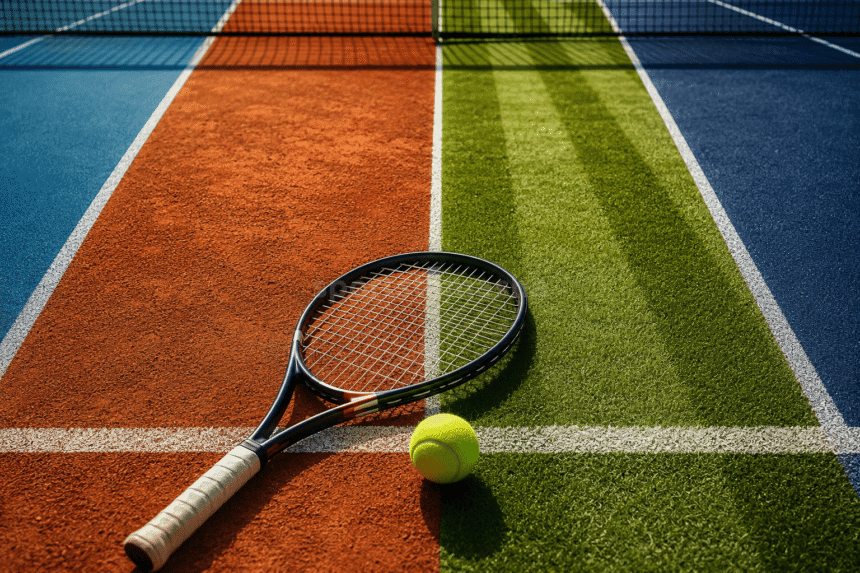
The French Open, played on clay at Roland Garros, rewards players with strong baseline consistency and physical stamina, as the surface’s slower ball speed and higher bounce typically produce longer, more attritional rallies than other surfaces.
Wimbledon, tennis’s oldest and most traditional Grand Slam, is played on grass, a surface that historically favoured serve-and-volley aggression due to its low, fast bounce, though modern racket and string technology has somewhat narrowed the stylistic gap between grass and other surfaces in recent years.
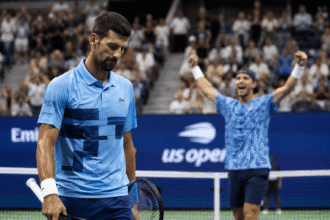
The US Open, played on hard courts in New York, closes out the Grand Slam calendar and is known for its vibrant, high-energy atmosphere, drawing some of the sport’s largest tournament crowds.
Why Surface Variety Matters So Much in Tennis
Unlike many sports played on a standardised playing surface, tennis’s surface variety fundamentally shapes playing style and tournament outcomes, with certain players building their entire game around excelling on a specific surface type. This variety is part of what makes a genuinely successful “Career Grand Slam” — winning all four majors at least once — such a significant and rare achievement, as it requires demonstrated excellence across fundamentally different physical and tactical conditions.
The Ranking System
Professional tennis uses a rolling points-based ranking system, with players earning points based on their performance across a defined ranking period, typically the preceding 52 weeks. This system determines tournament seeding and direct entry into major events, creating a season-long competitive incentive structure where consistent performance across the full calendar matters as much as isolated standout results at any single tournament.
Singles, Doubles, and Mixed Formats
While singles competition draws the vast majority of mainstream tennis attention, doubles and mixed doubles remain an important part of the sport’s competitive structure, rewarding different skills — net play, communication, and tactical positioning — than those typically emphasised in singles competition. Many players compete in both formats throughout their careers, particularly earlier in their development, using doubles competition to build match experience and net skills.
The Physical and Mental Demands of Professional Tennis
Tennis places unusually comprehensive physical demands on players, requiring explosive movement, exceptional cardiovascular endurance for long matches, and highly refined hand-eye coordination, all sustained over potentially several hours during a single match. The sport’s individual nature also places significant mental demands on players, who must manage pressure, fatigue, and momentum shifts entirely on their own, without the in-match tactical support available to athletes in team sports.
Frequently Asked Questions
Why do men’s Grand Slam matches sometimes last longer than women’s matches? Men’s Grand Slam singles matches have traditionally used a best-of-five-set format, compared to the best-of-three-set format used in women’s Grand Slam singles and most other professional tennis matches.
What does “Career Grand Slam” mean in tennis? It refers to a player winning all four major tournaments — the Australian Open, French Open, Wimbledon, and US Open — at least once during their career, a particularly difficult achievement given how differently each surface plays.
Why is clay considered a slower surface than grass? Clay produces a higher, slower ball bounce due to its texture, typically leading to longer rallies, while grass produces a lower, faster bounce that has historically rewarded more aggressive, attacking styles of play.
How does the tennis ranking system work? Players accumulate points based on tournament performance over a rolling period, typically the preceding 52 weeks, with these points determining rankings, tournament seeding, and direct entry eligibility for major events.
From the strategic variety demanded by different court surfaces to the intense physical and mental resilience required across a long match, tennis rewards a genuinely complete athletic and psychological skill set — which is exactly why the sport continues to produce such compelling individual rivalries and career narratives.
The Role of Coaching in Individual Tennis Careers
Unlike team sports, tennis coaching relationships tend to be highly personalised, often spanning years and shaping not just technical development but also a player’s broader competitive mentality and match strategy. Many top players work with a small, dedicated team including a head coach, fitness trainer, and occasionally a sports psychologist, reflecting the sport’s unusually comprehensive demands on both physical and mental preparation. Coaching changes, when they occur, are often closely followed by tennis media, given how significantly a new coaching relationship can influence a player’s subsequent form and tactical approach on court.
Mixed-surface preparation across the tennis calendar also shapes scheduling strategy for top players, who must carefully balance tournament selection to optimise both ranking points accumulation and physical readiness heading into each Grand Slam.