


Cricket 101: Formats, Rules and Why It Captivates a Billion Fans
Cricket is often described as a sport of patience and precision, yet it is also home to some of the most explosive, high-scoring entertainment in modern sport. With a global following estimated in the hundreds of millions, and a presence spanning England, India, Pakistan, Australia, South Africa, the Caribbean, and beyond, cricket occupies a unique space: a 19th-century gentleman’s game that has reinvented itself for the smartphone era.
The Basic Idea
At its core, cricket is a bat-and-ball game played between two teams of eleven players. One team bats, trying to score runs, while the other bowls and fields, trying to restrict those runs and dismiss the batting side. Innings, overs, wickets, and boundaries form the vocabulary of the sport, but the underlying contest is simple: outscore the opposition within the rules of the format being played.
A run is scored when batters cross between the wickets after hitting the ball, or automatically when the ball crosses the boundary rope (four runs if it bounces before reaching the boundary, six runs if it clears the rope without touching the ground). A team’s innings ends either when ten of its eleven batters are dismissed or when the allotted overs are exhausted, depending on the format.
The Three Main Formats
Test cricket is the oldest and most traditional format, played over five days with two innings per side. It rewards patience, technique, and strategic captaincy, and is widely regarded by purists as the ultimate examination of a cricketer’s skill.
One Day International (ODI) cricket limits each team to 50 overs per innings, condensing the contest into a single day. This format gained prominence through the Cricket World Cup, first held in 1975, and remains a proving ground for players who need both the technique of Test cricket and the urgency of a run chase.
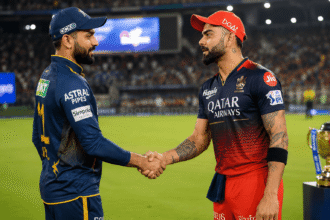
Twenty20 (T20) cricket restricts each side to 20 overs, producing matches that typically finish within three hours. Since its introduction in the mid-2000s, T20 has transformed cricket’s commercial landscape, giving rise to franchise leagues such as the IPL, Big Bash League, and Caribbean Premier League, and eventually to an even shorter T10 format in some markets.
How a Match Is Won
Regardless of format, victory typically comes in one of two ways: the team batting second successfully chases down the target set by the team batting first, or the team bowling second dismisses all ten opposition wickets, or exhausts the overs, while conceding fewer runs than needed. In Test cricket, a match can also end in a draw if neither side completes the required innings within the allotted days.
Key Roles on the Field
A cricket team is generally built around specialist roles. Batters are judged on their ability to score runs consistently against different types of bowling. Bowlers are split broadly into pace bowlers, who rely on speed and swing, and spin bowlers, who use finger or wrist spin to deceive batters through flight and turn. All-rounders contribute meaningfully with both bat and ball, and are often the most valuable players in a squad because of the tactical flexibility they provide. The wicketkeeper stands behind the stumps, and a captain manages field placements, bowling changes, and overall match strategy.
Why Cricket Resonates So Deeply
Cricket’s global footprint traces back to the British Empire, but its modern popularity is driven by different forces in different regions. In South Asia, cricket functions almost as a national pastime, with match days drawing viewership figures that rival any entertainment event. In England and Australia, it retains strong ties to tradition, county and state cricket, and historic rivalries such as the Ashes. In the Caribbean and parts of Africa, cricket carries deep cultural and historical significance tied to national identity.
The sport’s statistical richness also fuels its fandom. Cricket generates an enormous volume of data — batting averages, strike rates, economy rates, partnerships — that fans and analysts pore over, creating a culture of debate and comparison across generations of players.
The Rise of T20 Leagues
The last two decades have reshaped cricket’s economy. Franchise T20 leagues have created new revenue streams for players, boards, and broadcasters, while also internationalising domestic cricket: an Australian fast bowler might play in India’s IPL, England’s Hundred, and the UAE’s International League T20 all within a single year. This player mobility has raised standards across formats and introduced fans to talent they might never have otherwise seen.
Cricket’s Global Governance
The International Cricket Council (ICC) governs the sport at the global level, overseeing major tournaments including the ICC Cricket World Cup, the ICC T20 World Cup, and the World Test Championship. Regional and national boards, such as the BCCI in India, Cricket Australia, and the ECB in England, manage domestic structures, player contracts, and bilateral tours.
Frequently Asked Questions
What is the difference between an ODI and a T20 match? An ODI innings is limited to 50 overs per side, while a T20 innings is limited to 20 overs, making T20 matches significantly shorter and more attacking in style.
Can a Test match end without a winner? Yes. If neither team completes both innings within the five allotted days, the match is declared a draw.
Why do some cricket formats use a coin toss? The toss determines which captain chooses whether to bat or field first, a decision that can be shaped by pitch conditions, weather, and match strategy.
How many players are on a cricket team? Each team fields eleven players, with a limited number of substitutes permitted under modern playing conditions in some formats.
Whether followed through the meditative rhythms of a Test match or the frantic final overs of a T20 run chase, cricket continues to prove that a 19th-century sport can remain thoroughly modern, adapting its formats without losing the core skills and rivalries that first made it a global phenomenon.
The Growing Role of Data Analytics in Modern Cricket
Cricket has increasingly embraced data analytics at both international and franchise level, with teams employing dedicated analysts to study opposition tendencies, optimise batting order decisions, and inform bowling strategy against specific opponents. This analytical approach has become particularly influential in T20 cricket, where marginal tactical advantages around field placement and matchup exploitation can meaningfully affect match outcomes given the format’s condensed nature. The growing availability of ball-tracking and player performance data has also enriched broadcast coverage, giving fans considerably deeper insight into the tactical nuances underlying each contest than was available in earlier eras of the sport.